

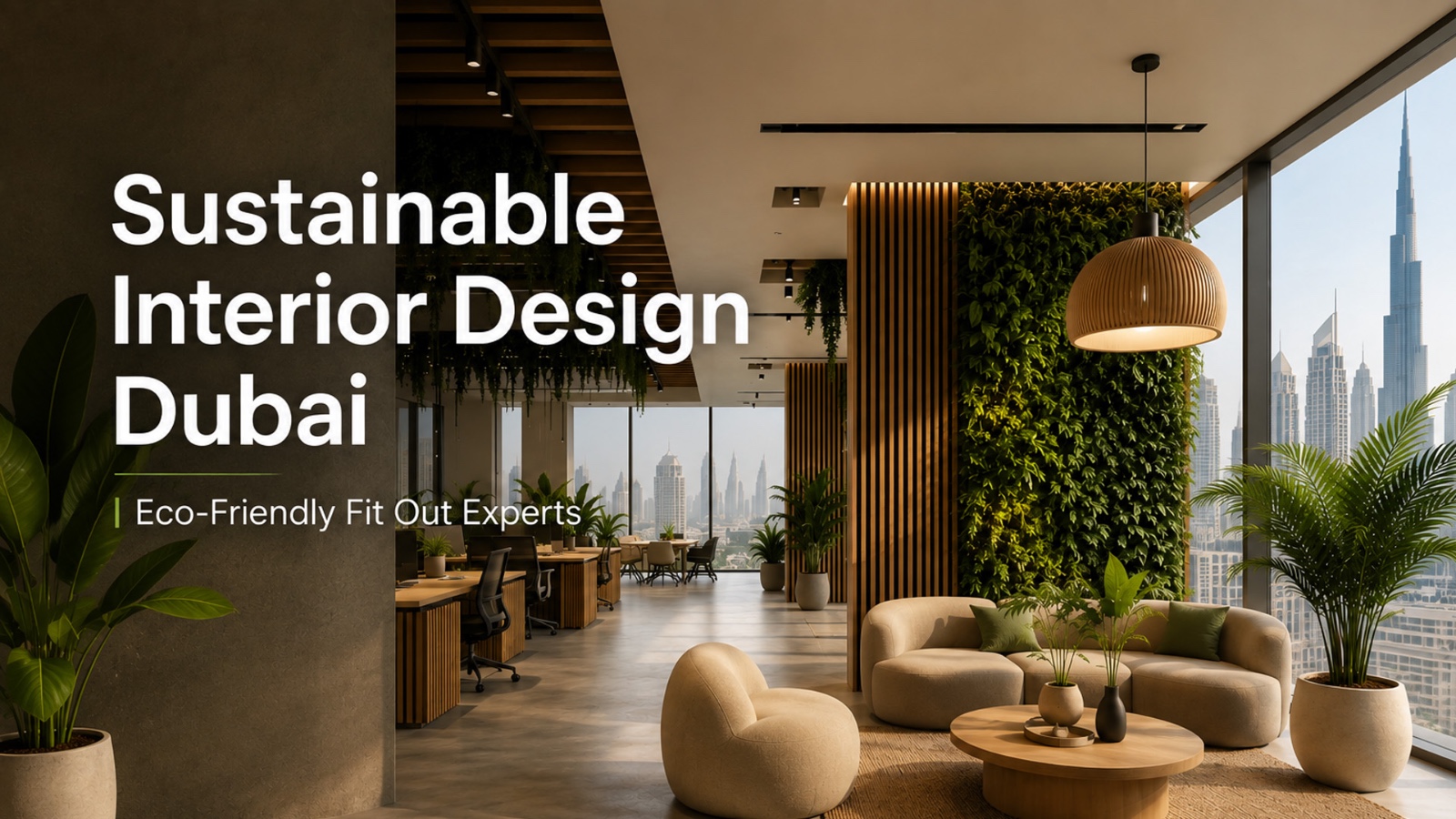
Demand for sustainable interior design in Dubai has grown significantly as homeowners, businesses, and developers move away from short-term aesthetics toward spaces that are healthier, more energy-efficient, and built to last. Whether it’s a villa, office, retail unit, or F&B space, sustainable interior design in Dubai is no longer a niche request — it’s fast becoming a standard expectation.
This guide covers what sustainable interior design Dubai actually involves, the materials and systems that define it, and how to plan a genuinely eco-friendly fit-out rather than one that simply markets itself as “green.”
What Does Sustainable Interior Design Mean in Dubai?
Sustainable interior design in Dubai goes beyond using a few recycled materials. A genuinely sustainable approach to interior design in Dubai considers the full lifecycle of a space — material sourcing, energy consumption, indoor air quality, water efficiency, and long-term durability.
For Dubai specifically, sustainable interior design has to account for local conditions: intense heat, high cooling demand, and limited natural ventilation in many buildings. This means sustainable design in Dubai isn’t just about eco-friendly materials — it’s equally about energy-efficient systems that reduce the strain of the climate on a building’s MEP infrastructure.
Key Elements of Sustainable Interior Design Dubai
1. Low-VOC and Eco-Friendly Materials
One of the most immediate ways to apply sustainable interior design principles is through material selection. Low-VOC (volatile organic compound) paints, adhesives, and sealants significantly improve indoor air quality compared to conventional alternatives — an important factor in Dubai, where interiors are sealed and air-conditioned for most of the year.
Other material choices that support sustainable interior design in Dubai include:
FSC-certified timber and joinery — sourced from responsibly managed forests
Recycled or reclaimed materials — for flooring, cladding, and feature elements
Natural and locally-sourced stone — reducing transport-related carbon footprint
Low-VOC paints and finishes — improving indoor air quality
Sustainable textiles — for upholstery, curtains, and soft furnishings
2. Energy-Efficient Lighting Design
Lighting is one of the highest-impact areas for sustainable design in Dubai, given the extensive use of artificial lighting across homes, offices, and retail spaces. LED systems, daylight sensors, and zoned lighting controls significantly cut energy consumption without compromising design quality — making this one of the easiest upgrades to justify from both a sustainability and cost-saving perspective.
3. Energy-Efficient MEP Systems
Sustainable interior design in Dubai is closely tied to MEP performance, since cooling accounts for the largest share of energy use in most buildings across the UAE. Key considerations include:
High-efficiency HVAC systems sized correctly for the space
Smart thermostats and zoned climate control
Insulation and glazing that reduce cooling load
Water-efficient fixtures and greywater systems where feasible
This is where sustainable interior design and MEP engineering overlap directly — a beautifully designed space with an inefficient mechanical system isn’t truly sustainable, regardless of the materials used.
4. Water Efficiency
Water-saving fixtures, low-flow taps, and efficient irrigation for any landscaped areas all contribute to a genuinely sustainable design approach in Dubai, particularly relevant given the region’s water scarcity and desalination-dependent supply.
5. Passive Design Strategies
Good sustainable interior design also considers passive strategies — window placement, shading, and layout — that reduce reliance on mechanical cooling in the first place. While retrofitting passive design into an existing villa or unit has limitations, thoughtful interior layout and window treatment can still meaningfully reduce heat gain.
Benefits of Sustainable Interior Design Dubai
Choosing sustainable interior design in Dubai delivers benefits beyond environmental impact:
Lower long-term running costs — energy-efficient systems reduce utility bills significantly over the life of a space
Improved indoor air quality — low-VOC materials and better ventilation directly benefit occupant health
Higher property value — sustainable, well-built spaces tend to hold value and appeal better on resale or lease
Regulatory alignment — Dubai’s Green Building Regulations increasingly encourage or require sustainable specifications for certain building types
Brand and reputation value — for commercial spaces, a genuinely sustainable fit-out increasingly matters to clients, tenants, and employees
Sustainable Interior Design for Different Spaces
Villas & Homes
Focuses on indoor air quality, energy-efficient AC systems, water-saving fixtures, and durable, low-maintenance materials that reduce the need for frequent replacement.
Offices
Sustainable office design in Dubai often centers on lighting efficiency, air quality, and material choices that support employee well-being while reducing operational costs.
Retail & F&B
Sustainable interior design in retail and F&B spaces balances brand-driven aesthetics with practical efficiency — energy-efficient lighting and HVAC design that doesn’t compromise the customer experience.
Common Misconceptions About Sustainable Interior Design
“Sustainable design costs significantly more.” While some sustainable materials carry a higher upfront cost, the long-term savings on energy and maintenance often offset the difference — and not every sustainable choice comes at a premium.
“Sustainable design means limited aesthetic options.” Sustainable interior design today spans every style, from minimalist to luxury. Material and system choices can support sustainability goals without limiting design vision.
“Sustainability is only relevant for large commercial projects.” Villas, small offices, and retail units all benefit from sustainable interior design principles — scale doesn’t determine relevance.
Why Work with an Experienced Sustainable Interior Design Contractor in Dubai
Delivering genuinely sustainable interior design in Dubai requires more than sourcing eco-friendly materials — it requires a contractor who understands how design, MEP, and joinery work together to reduce long-term energy and resource consumption.
Magnus Interiors has delivered fit-out, MEP, and joinery projects across the UAE since 2006, bringing all three disciplines together under one team. This integrated approach is exactly what sustainable interior design requires — because sustainability isn’t just a finishes decision; it’s a systems decision.
If you’re planning a project and want to explore sustainable interior design in Dubai for your villa, office, or commercial space, get in touch with Magnus Interiors to discuss your goals.